Understanding Battery Capacity
Before determining the size of the solar panel needed to charge a 100Ah battery, it’s essential to understand what Ah (amp-hours) means. Amp-hours indicate the capacity of a battery; in this case, a 100Ah battery can theoretically deliver 100 amps for one hour, or 10 amps for ten hours, or any other combination of amps and time that equates to 100.
When considering solar power systems, you must also consider the depth of discharge (DoD) for the battery. For example, while lithium batteries can typically be discharged to 20%, lead-acid batteries should not be discharged beyond 50% to preserve their lifespan. Therefore, knowing the usable capacity is equally important:
- For a lithium battery: 100Ah * 0.8 (80% DoD) = 80Ah usable
- For a lead-acid battery: 100Ah * 0.5 (50% DoD) = 50Ah usable
Calculating Daily Energy Needs
Next, assess your daily energy consumption to determine how much energy you need to generate with solar panels. The energy you need is measured in watt-hours (Wh). To calculate daily energy needs, use the following formula:
Daily Energy Consumption (Wh) = Average Daily Load (W) x Hours of Use (h)
Let’s assume your devices collectively draw 200 watts, and you expect to use them for 5 hours each day:
Daily Energy Consumption = 200W x 5h = 1000Wh
Choosing the Right Solar Panel Size
To figure out the size of the solar panel needed to charge a 100Ah battery, we must convert our daily energy needs into solar panel output. Solar panels are rated in watts. We need to determine how many watts are required to fulfill our energy consumption and charge the battery accordingly.
As a rule of thumb, solar panels can produce around 4 to 6 hours of usable sunlight per day on average, depending on the location and environmental conditions. For this example, we’ll use 5 hours.
To find the necessary solar panel output, we divide the daily energy requirement by the average solar hours:
Required Solar Panel Output (W) = Daily Energy Consumption (Wh) / Average Sunlight Hours (h)
Required Solar Panel Output = 1000Wh / 5h = 200W
Understanding Charge Controllers
Before connecting your solar system to your battery, you need to include a charge controller in the system. This device regulates the voltage and current coming from the solar panels to prevent overcharging and protect the battery.
There are two main types of charge controllers:
- PWM (Pulse Width Modulation): Simpler and often less expensive, PWM controllers are effective for smaller solar systems.
- MPPT (Maximum Power Point Tracking): More advanced and efficient, MPPT controllers adjust the input voltage to maximize power extraction from the solar panel.
For a system charging a 100Ah battery, an MPPT charge controller is recommended, particularly if you are using larger solar panels or planning on expanding your system in the future.
Conversion Efficiency and Losses
It's essential to account for efficiency losses in your calculations. Various factors can impact the efficiency of your solar panel system, including:
- Weather conditions (cloud cover, rain, etc.)
- Shading from trees or buildings
- Temperature (panels are less efficient at extreme temperatures)
- Wiring losses and inverter inefficiencies
Taking these losses into account, a good estimate is about 75% efficiency for the entire system. Therefore, you'll need to adjust your calculations accordingly:
No. of Panels Needed = Required Solar Panel Output / Efficiency
No. of Panels Needed = 200W / 0.75 = 267W
Selecting the Power Rating of Solar Panels
Solar panels come in various wattage ratings. Common sizes include 100W, 150W, and 300W panels. Suppose you choose 300W solar panels due to their efficiency and space constraints:
Number of Panels Required = Total Power Requirement / Power per Panel
Number of Panels Required = 267W / 300W = 0.89
This calculation shows that you would need just a single 300W panel to adequately charge your 100Ah battery while accounting for efficiency losses.
Real-World Considerations
While theoretical calculations provide a solid foundation for understanding how to size your solar panel system, real-world factors must also be considered:
- Location: The number of sunlight hours can vary significantly based on geographical location. Ensure to research average sunlight hours for your area.
- Usage Patterns: Consider your daily power usage and how it might change over time. Evaluate whether you may introduce new devices or equipment.
- System Expansion: If you plan to increase your power needs, it might be wise to oversize your solar panel system in advance.
Calculating for Extended Use
If you intend to use the battery for extended periods without recharging, or if your solar energy generation is intermittent, planning for extra capacity becomes vital. The following approaches can help:
- Consider adding additional solar panels to create a buffer for cloudy days or higher energy demands.
- Invest in a larger battery bank to accommodate period of low sunlight.
- Utilize energy-efficient appliances to reduce total energy consumption where possible.
Practical Example of a Solar Charging System
To consolidate the information covered, let's consider a practical example of a solar charging system for a 100Ah battery. If you have:
- A requirement of 1000Wh per day
- 5 hours of sunlight per day
- Considering losses at 75% efficiency
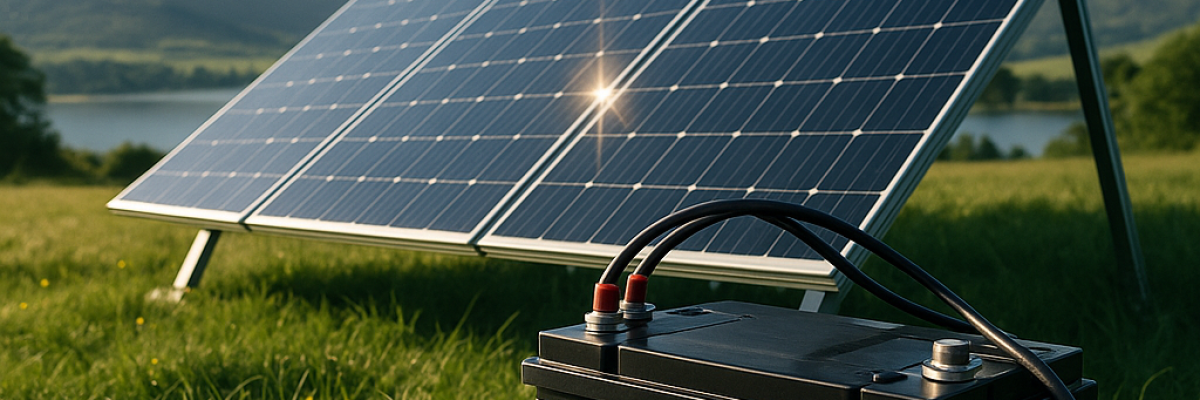
The calculations would yield a requirement for a minimum of 267W of solar panels, translating to a suggestion to use a single 300W panel. Select an MPPT charge controller with suitable current ratings, and connect the system carefully to ensure safety and efficiency.
Conclusion
In conclusion, determining the size of the solar panel needed to charge a 100Ah battery requires careful analysis of your energy needs, system efficiency, and the performance characteristics of solar panels and batteries. By understanding the fundamentals of battery capacity, energy consumption, and accounting for real-world conditions, you should be able to install a solar system that effectively meets your energy requirements efficiently and sustainably.
Proper planning, consideration of future energy needs, and the right equipment selection will ensure a successful solar energy system that can effectively keep your 100Ah battery charged, contributing to your self-sufficiency and decreasing reliance on the electrical grid.