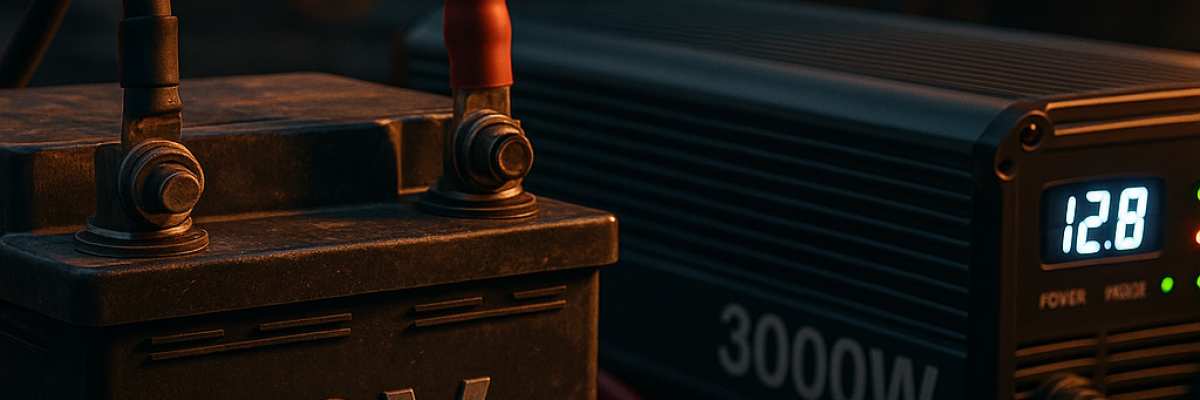
Understanding Battery and Inverter Basics
When it comes to understanding the longevity of a 12V battery when paired with a 3000W inverter, it's essential to grasp some foundational concepts about batteries and inverters. A 3000W inverter converts DC (Direct Current) from the battery into AC (Alternating Current) power, which is usable by most household appliances. The duration that a 12V battery will last when supplying power through a 3000W inverter largely depends on the battery's amp-hour (Ah) rating, the load being drawn from the inverter, and the efficiency of the inverter itself.
Calculating Power Consumption
Before determining how long a 12V battery can last with a 3000W inverter, it’s vital to understand how to calculate the power consumption of devices powered by the inverter.
- The power consumption of a device is measured in watts (W).
- To convert watts to amps (which is what a 12V battery provides), use the following formula:
Amps (A) = Watts (W) / Voltage (V)
For a 3000W load, this would be:
Amps = 3000W / 12V = 250A
This calculation illustrates that a 3000W inverter will draw 250A from a 12V battery when operating at full capacity.
Understanding Battery Capacity
The capacity of a 12V battery is typically measured in amp-hours (Ah). This rating indicates how many amps a battery can provide over a specific period. For example, a battery rated at 100Ah can theoretically deliver 100 amps for 1 hour, or 50 amps for 2 hours, etc. It's important to note that discharging a battery too deeply can damage it and reduce its overall lifespan.
When determining how long a battery will last under load, the formula is:
Time (hours) = Battery Capacity (Ah) / Load (A)
Example Calculation
Let’s take an example of a common 12V battery with a capacity of 100Ah. If we connect this battery to a 3000W inverter, the total current drawn will be approximately 250A as calculated earlier.
Plugging in the numbers:
Time = 100Ah / 250A = 0.4 hours or 24 minutes
This calculation means that a fully charged 100Ah battery can only support a load of 3000W for about 24 minutes before it is depleted. However, this is an ideal situation and does not account for real-world conditions.
Factors Affecting Battery Life
While the simple calculations provide a baseline, various factors can significantly affect how long a 12V battery will last:
- Inverter Efficiency: Most inverters are not 100% efficient. Inverter efficiency typically ranges from 85% to 95%. If we assume an efficiency of 90%, the actual power drawn from the battery will be higher. Thus, the current draw increases to 278A (3000W / (12V * 0.9)). This changes the calculation to:
Time = 100Ah / 278A ≈ 0.36 hours or approximately 22 minutes
- Battery Age and Type: Older batteries may not hold a charge as well as new ones. Additionally, different battery types, such as lead-acid or lithium-ion, have varying discharge characteristics. Lithium-ion batteries typically offer better performance under load.
- Temperature: Battery efficiency can degrade in extreme temperatures. Cold temperatures can reduce the effective capacity of lead-acid batteries, while high temperatures can cause overheating and reduced lifespan.
- Depth of Discharge: Regularly discharging a battery deeply can shorten its lifespan. It’s generally advised to discharge lead-acid batteries to no less than 50% capacity to preserve their health.
- Load Fluctuation: If the load connected to the inverter fluctuates, the battery life will also vary. Appliances with motors may draw more power during startup (inrush current) than they do during normal operation.
Selecting the Right Battery Size
To increase the duration that a 12V battery can last when using a 3000W inverter, one option is to select a battery with a larger amp-hour rating. Here are examples of how larger batteries would perform:
- 200Ah Battery: For a 200Ah battery:
Time = 200Ah / 250A = 0.8 hours or approximately 48 minutes (without considering inverter efficiency)
- 300Ah Battery: For a 300Ah battery:
Time = 300Ah / 250A = 1.2 hours or approximately 72 minutes (without considering inverter efficiency)
Using a larger battery will offer more reliable power for a longer duration but will also come with increased costs and weight. Additionally, consider how much weight you can realistically handle if you're using this setup for applications such as RVing or boating.
Alternatives to Extend Battery Life
If using a 12V battery with a 3000W inverter, there are several strategies to extend the battery’s operational time:
- Lower the Load: Instead of trying to power a full 3000W, use only the necessary appliances to minimize power consumption.
- Use Battery Management Systems: Incorporating a battery management system (BMS) can help monitor battery usage, health, and efficiency.
- Invest in High-quality Batteries: Opt for batteries with higher quality and better chemistry like lithium-ion, which offer longer cycles and deeper discharge capabilities.
- Consider Additional Batteries: Connecting multiple batteries in parallel can increase total amp-hours available to the inverter, providing a longer run time.
- Utilize Solar Power: If available, incorporating solar panels can help recharge the batteries while the inverter is in use, extending overall operational time.
Conclusion
Understanding how long a 12V battery will last with a 3000W inverter involves several calculations and considerations regarding battery capacity, load demands, and the specific conditions of use. While a typical calculation offers a starting point for expected longevity, numerous factors can affect real-world performance. By considering the efficiency of the inverter, the specific characteristics of the battery, the demands of your load, and employing strategies to maximize battery life, you can effectively manage your power needs and ensure longer operation from your 12V battery setup.
Whether you're using this for recreational activities, home backup, or other applications, being informed and prepared will enable you to get the most from your system. Always ensure you scrutinize your options carefully and align them with your energy needs to ensure reliability and performance in any situation.