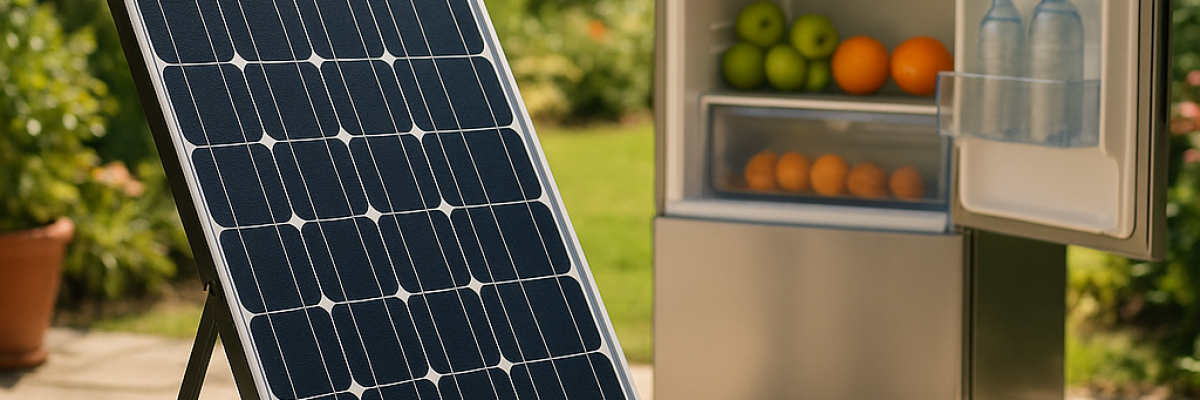
Introduction to Solar Power and Refrigerators
In recent years, the shift towards renewable energy has gained significant momentum, with solar power at the forefront of this evolution. Many households are keen on harnessing solar energy not just for lighting and small appliances but also for larger appliances like refrigerators. A common question that arises among these individuals is: Can a 200W solar panel indeed run a refrigerator? To answer this question comprehensively, we need to explore the workings of solar panels, the energy requirements of refrigerators, and the feasibility of using solar power in household settings.
Understanding Solar Panels
Solar panels convert sunlight into electrical energy through photovoltaic (PV) cells. The capacity of a solar panel is measured in watts (W), which indicates the amount of power it can generate under ideal conditions (typically peak sun hours). A 200W solar panel is capable of producing energy on a sunny day, but several factors influence its actual output, including the angle of the panel, weather conditions, and the amount of sunshine available throughout the day. Furthermore, solar energy is typically harnessed using a solar power system that includes an inverter and a battery storage mechanism.
Energy Consumption of Refrigerators
Refrigerators come in various designs and energy efficiency ratings, which significantly influence their energy consumption. The average refrigerator generally consumes between 100 to 800 watts of electricity, depending on size, type, and efficiency. Energy-efficient models often boast an Energy Star rating, which indicates they consume less energy than standard models. To understand if a 200W solar panel can run a refrigerator, it is essential to determine the specific energy requirements of the unit in question.
Calculating the Energy Needs of a Refrigerator
To assess whether a 200W solar panel can run a refrigerator, we must consider several key factors:
- Daily Energy Consumption: This is calculated in kilowatt-hours (kWh). A refrigerator that consumes 400 watts continuously for 24 hours would require:
- Daily Energy Consumption = 400W x 24 hours = 9.6 kWh per day.
It’s important to note that refrigerators don’t run continuously. They cycle on and off to maintain the desired internal temperature. On average, a refrigerator may only draw power for about 8 to 10 hours throughout the day, leading to a lower average consumption over a 24-hour period.
Converting Solar Production to Daily Energy Supply
A 200W solar panel under optimum conditions can produce about:
- Peak Sun Hours: Assume an average of 5 peak sun hours per day.
- Energy Produced: 200W x 5 hours = 1000Wh or 1 kWh per day.
This production figure indicates a solar panel's performance can vary throughout the seasons and locations. For example, a location with fewer sunny days might see considerably lower daily production, while those in sunny climates might enjoy more generous outputs.
Feasibility of Running a Refrigerator on a 200W Solar Panel
Based on our calculations, running a refrigerator solely on a 200W solar panel presents challenges:
- A refrigerator requiring 9.6 kWh per day cannot be serviced adequately by a solar panel producing only about 1 kWh per day.
- Unless the refrigerator is a highly efficient model or operates for much lesser hours, a standard refrigerator's energy demands far exceed what a 200W solar panel can produce.
Factors Influencing Solar Panel Performance
The output of a solar panel is affected by several factors, including:
- Geographical Location: Areas with more sunlight yield higher energy outputs.
- Weather Conditions: Overcast, rainy, or snowy weather will decrease production.
- Panel Orientation and Angle: Panels installed at optimal angles gain more direct sunlight throughout the day.
- Shading: Trees, buildings, or other obstacles that cast shadows can dramatically reduce energy production.
Considering Battery Storage
While running a refrigerator directly off a 200W solar panel may prove infeasible, incorporating battery storage provides an additional layer of power management. A battery bank can store energy produced during the day, making it available to run a refrigerator when sufficient energy isn’t being harvested directly from the solar panels.
Alternatives and Solutions
If your intention is to run a refrigerator on solar power, explore the following alternatives:
- Upgrade Solar Panel Capacity: Consider investing in larger solar panel systems (e.g., a 1000W system) that can produce enough energy for your refrigerator.
- Appliance Selection: Choose a small or energy-efficient refrigerator designed for lower energy consumption.
- Smart Usage: Limit the refrigerator's running time by organizing items to keep everything cool longer and manage door openings.
- Use an Energy-efficient Refrigerator: Select models with superior energy ratings to minimize energy consumption.
Cost Considerations for Solar Installation
Installing a solar power system involves upfront costs which can vary significantly based on the components you choose and your geographical location. Below are the key elements influencing these costs:
- Solar Panels: This includes the price for purchasing enough panels to meet energy demands.
- Inverter: An essential for converting DC power generated by solar panels into AC power used by residential appliances.
- Installation: Labor costs for mounting, wiring, and configuring your solar system.
- Battery Storage: If you choose to include batteries, it amounts to a significant portion of the overall cost.
Though the initial investment can be steep, many find the long-term savings on energy bills justify the expenditure, especially with federal and state rebates and incentives available in many regions.
Conclusion
In summary, a 200W solar panel, while a viable energy solution for many small appliances, is inadequate for powering the average refrigerator. The energy demand of most refrigerators greatly surpasses the output from a single 200W panel. However, through strategic planning, combining larger solar panel systems, battery storage, and selecting energy-efficient appliances, one can effectively harness solar energy to run a refrigerator sustainably.
Exploring these options provides not only a roadmap to renewable energy but also aligns with the broader goals of energy independence and ecological responsibility.